


Written by Jonathan Stratton, Co-Owner, Creative Real Estate Educator/Expert
If you’re in foreclosure and someone reached out to offer help, your first instinct might be relief. But that offer deserves a hard look before you sign anything, pay anything, or say yes to anything. Foreclosure rescue scams are specifically designed to find you at your most vulnerable moment… and the people running them are good at sounding legitimate. Here’s how to evaluate what’s in front of you right now.
The truth is, when an auction date is looming, panic sets in, and that sheer panic can make it incredibly hard to see clearly. Homeowners often find themselves completely overwhelmed, not knowing what to do next or how to protect their families. It is exactly during these high-stress moments that predatory operators strike. Slowing down and learning how to filter out the noise is your best defense.
Key Takeaways
Foreclosure rescue scams often use complex fee structures to trap homeowners. If a company is demanding money from you upfront before delivering a clear, written result, you should immediately contact an Unlocked Home Relief specialist to discuss your options safely.
If someone contacted you first because they found you through a public foreclosure notice, treat that as an immediate red flag.
No legitimate company can guarantee they will stop your foreclosure… anyone who promises that is lying.
The only person who can officially approve a loan modification is your loan servicer. A third party cannot do this for you.
Free, legitimate help is available right now through HUD-approved counselors at 1-888-995-HOPE (4673) at no cost to you.
Why You’re Getting These Calls and Letters in the First Place
When a foreclosure is filed, it becomes part of the public record. That filing is searchable by anyone. Scam operators… and some legitimate investors… routinely mine these public records to build contact lists of homeowners in financial distress. So if someone reached out to you by phone, mail, or even a knock on your door shortly after your foreclosure was filed, they almost certainly found you this way.
That unsolicited contact is itself a warning sign. It does not mean every person who contacts you is a scammer, but it does mean you should apply extra scrutiny to anyone who came to you rather than the other way around. Legitimate housing counselors and attorneys are not typically trolling public records to drum up clients.
The stress of facing foreclosure is real, and scammers know it. Their entire strategy depends on your urgency overriding your judgment. Slowing down and asking the right questions is your first line of defense. For a comprehensive look at avoiding bad actors, check out Don’t Get Scammed: How to Spot Mortgage Relief Fraud.
The Red Flags That Identify a Foreclosure Rescue Scam
These warning signs are consistent across virtually every case of mortgage rescue fraud. If the offer in front of you triggers even one of these, stop and verify before going any further.
They Asked for Money Before Doing Anything
Charging upfront fees for mortgage relief services is illegal under federal law. According to compliance standards established under the Federal Trade Commission’s Mortgage Assistance Relief Services (MARS) Rule, companies are strictly prohibited from collecting fees until a homeowner has a written, acceptable offer from their lender.
Many fraudulent third-party loan modification outfits will demand thousands of dollars upfront, promising they can handle everything. Homeowners frequently report paying hefty sums—sometimes upwards of $6,200—only to discover the company modified nothing, left them with a tiny window before their next payment was due, and essentially left them stranded. Any company or individual who demands payment before they have produced a result for you is breaking the law and almost certainly intending to take your money and disappear. Legitimate help is either free (through nonprofits and government programs) or fee-based only after a service is performed.
They Guaranteed They Can Stop the Foreclosure
No one can guarantee that. Not a lawyer. Not a housing counselor. Not a “foreclosure specialist.” Foreclosure outcomes depend on your lender, your loan type, your financial situation, and state law, and no third party controls all of those variables. Anyone promising a guaranteed outcome is telling you what you want to hear in order to get your trust and your money.
They Told You to Stop Talking to Your Lender
This is one of the most dangerous tactics in the foreclosure rescue scam playbook. A scammer will tell you to redirect all communication through them and to stop contacting your loan servicer directly.
This cuts you off from the one relationship that actually matters. Your lender is the only party that can approve a real modification, forbearance, or payment plan. Furthermore, isolating you allows the scammer to hide a legal reality known as “dual tracking.” Dual tracking occurs when a mortgage servicer moves forward with the foreclosure process and advances your auction date at the exact same time they are supposedly reviewing you for a loan modification or hardship plan.
While a scammer stringing you along claims everything is under control, your servicer’s foreclosure track is actively running in the background. If you want to better understand what happens behind the scenes during home relief requests, you can learn more about how lenders handle ongoing files in Waiting on a Loan Modification? Here’s What Dual Track Really Means.
They Asked You to Sign Over the Deed or Title
Deed transfer scams are a specific and devastating category of foreclosure fraud. The scheme typically works like this: someone offers to buy your home temporarily, let you stay as a renter, and sell it back to you later once your finances improve. Once you sign over the deed, you have lost ownership of your home. The “leaseback” arrangement almost always falls apart, you get evicted, and the scammer has your property. Never sign any document transferring ownership of your home without a real estate attorney reviewing it first.
They Used Official-Sounding Names or Government Logos
Scammers frequently impersonate government agencies or HUD-approved programs. They use words like “Federal,” “National,” “Official,” or “Government” in their business names. They may display fake logos or certifications. Always verify any organization’s credentials independently, not using contact information the organization itself provided to you.
They Pressured You to Sign Quickly
Urgency is a manipulation tactic. Legitimate professionals understand that you need time to read documents, ask questions, and verify credentials. If someone is pushing you to “sign today before it’s too late,” they are manufacturing a false deadline to prevent you from thinking clearly.
How to Verify a Foreclosure Help Offer Before You Respond
When navigating these high-pressure situations, it helps to review verified educational resources. For a complete guide on how to safely explore your alternatives, you can check out the educational resources provided by Relief Resource Hub, which helps homeowners understand baseline paths early in their financial hardship journey.
When someone offers to help you avoid foreclosure, here is a practical verification process you can use before you give them any information, money, or signatures.
| Step | What to Do | Where to Check |
|---|---|---|
| Check their license | Look up the individual or company. | Your state's official real estate licensing board or consumer protection agency. To ensure you are reviewing accurate credentials, you can work with an Unlocked Home Relief specialist to safely evaluate any outside service offers. |
| Search the name | Google the business name plus “complaint” or “scam.” | Consumer Financial Protection Bureau complaint database. |
| Verify government claims | Call the agency they claim to represent. | Use a phone number from the official .gov website, not the number they gave you. |
| Ask for the fee structure in writing | A legitimate provider will give this to you. | If they refuse or stall, walk away. |
| Have an attorney review documents | Especially anything involving your deed or title. | Local legal aid office or your own real estate attorney. |
What Legitimate Foreclosure Help Actually Looks Like
Understanding what real help looks like makes the fraudulent offers easier to spot by comparison. Mortgage rescue fraud is designed to mimic legitimate assistance, so the contrast matters.
A legitimate HUD-approved housing counselor will review your full financial picture, explain your options under your specific loan type, contact your loan servicer on your behalf if needed, and help you understand what a realistic outcome looks like… all at no cost to you. They will never tell you to stop communicating with your lender. They will never ask you to sign over your property. If you are trying to understand your primary responsibilities early on, find out more in Falling Behind on Your Mortgage? Here’s How to Stop Foreclosure.
A legitimate attorney specializing in foreclosure defense will review the legality of the foreclosure process, identify any errors in how the foreclosure was initiated, and represent you in court if there are valid defenses. They will charge fees (legal aid may provide this for free if you qualify), but those fees will be disclosed upfront and clearly tied to specific services.
It’s also worth noting that well-meaning family members or acquaintances in general real estate often jump in with discouraging advice, claiming you’ll be lucky to sell the house for what you bought it for. The truth is, standard real estate agents are used to a picture-perfect box where houses need minimal work and homeowners have months to sell. They rarely understand the nuances of pre-foreclosure timelines. Legitimate assistance focuses on your specific legal and logistical reality, not generic real estate opinions.
When structural alternatives are required due to an unsustainable mortgage, programmatic options like Unlocked Home Relief’s Fresh Start Housing Solutions offer an ethical alternative to aggressive cash buyers by helping eligible homeowners strategically sell, postpone auctions to buy time, coordinate moving logistics, and transition into affordable housing at no out-of-pocket cost.
Your loan servicer directly remains your most important contact. Many homeowners in foreclosure don’t realize that lenders often prefer a workout solution over completing the foreclosure… it is expensive and slow for them too. Loan modifications, repayment plans, forbearance agreements, and short sales are all options that only your servicer can authorize.
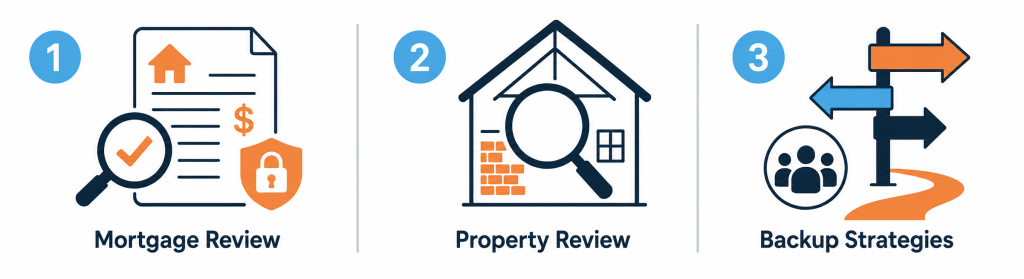
Understanding the Anatomy of a Legitimate Property Evaluation
When exploring an equity-based transition or transition program, an authentic provider will guide you through a clear, upfront process. Knowing how real professionals operate prevents you from falling for deceptive shortcuts.
Reviewing a Recent Mortgage Statement: Real providers require a current statement to perform accurate financial underwriting. They need to verify the exact payoff amount and look for past-due balances. This information is used purely to determine how much equity can be preserved for you—not to take over your account or intercept your lender communications.
The “No-Judgment” Internal Property Review: To build an accurate valuation strategy, an in-house property appraisal is required. A real professional does not care about clutter, moving boxes, unmade beds, or maintenance mess. They are looking strictly at structural elements to see if the property’s equity will cover the transition services.
Establishing Secondary Strategies: If a home doesn’t qualify for a primary relief track, an authentic provider will lay out secondary backup strategies. You should never be left feeling stranded without a paddle; a legitimate team will walk you through alternative pathways to find an organized resolution.
Deconstructing the Reality of the Bankruptcy Track
When faced with a looming auction date, many homeowners consider filing for bankruptcy as a quick way to freeze the timeline. While it can act as a temporary pause button, it is vital to understand the structural mechanics of how this impacts a home and a family’s financial stability.
For a homeowner attempting to save a house, a Chapter 13 filing is generally the primary path utilized. It is important to know that a Chapter 13 bankruptcy does not erase your mortgage debt; instead, it restructures it. An attorney will rebuild your financial picture, folding credit cards, back mortgage payments, and standard fees into a court-mandated payment plan.
Before committing to this path, homeowners must weigh three critical factors:
Upfront Financial Costs: Retaining a reputable bankruptcy attorney requires an upfront legal retainer fee, typically ranging from $3,500 to $5,000. For a family already facing financial hardship, this is a significant amount of capital to risk.
Higher Monthly Obligations: Because back payments and additional debts are compressed into the court’s restructuring plan, the resulting monthly payment is often significantly higher than the original mortgage payment.
The Dismissal Risk: If the household budget is tightly squeezed and a single restructured payment is missed 60 days down the road, the bankruptcy attorney or trustee will frequently move to dismiss the case. When a case is dismissed, the upfront retainer money is gone, the legal protection evaporates, and the lender can set a new foreclosure auction date in as little as 30 to 45 days. Furthermore, the bankruptcy filing remains on the consumer’s credit report for up to seven years, creating long-term financial barriers.
For a comprehensive breakdown of how these legal timelines interact with real estate, you can read more in Bankruptcy & Foreclosure: A Guide for New England Homeowners.
The Upfront Fee Rule: Your Simplest Filter
If you want a simple way to instantly filter out predatory offers from legitimate assistance, look closely at when and how they expect to be paid.
The moment a third-party service provider pressures you for an immediate fee, application charge, or retainer before showing you a verified, written outcome from your lender, it is time to pause. Navigating these situations can be confusing, but keeping your finances protected while verifying any out-of-pocket demands is the safest way to evaluate your options.
Where to Get Real Help Right Now
These are verified, legitimate sources of help for homeowners facing foreclosure:
HUD-Approved Housing Counselors: Call 1-888-995-HOPE (4673) to reach the Homeowner’s HOPE Hotline. This is a free service staffed by HUD-approved housing counselors who specialize in foreclosure prevention. They are available to help you understand your options and can communicate with your servicer on your behalf.
Legal Aid Organizations: Most areas have a legal aid office that provides free or low-cost legal representation to qualifying homeowners. Search for “[your state] legal aid foreclosure” to find the office nearest to you.
Your State Attorney General’s Office: If you have already been contacted by someone you suspect is running a foreclosure rescue scam, your state AG’s office is where you report it. Many states have specific mortgage fraud units. For example, if you reside in New England, you can document and escalate predatory patterns directly through your state’s consumer protection bureau, such as the New Hampshire Department of Justice Office of the Attorney General, the Massachusetts Attorney General’s Consumer Advocacy & Response Division, the Maine Attorney General’s Consumer Protection Division, the Vermont Attorney General’s Consumer Assistance Program, or the Rhode Island Attorney General’s Consumer Protection Unit.
The Consumer Financial Protection Bureau (CFPB): The CFPB accepts complaints about mortgage servicers and third-party mortgage relief companies at consumerfinance.gov. Filing a complaint creates a record and may prompt a formal response from the company.
The FBI: If you believe you have been targeted by an organized foreclosure rescue fraud scheme, the FBI accepts tips at tips.fbi.gov. As the SERP data above shows, the FBI actively investigates these cases.
Furthermore, comprehensive support networks recognize that a housing crisis affects the human side of life. Authentic care programs, such as Unlocked Home Relief’s Holistic Supportive Services, stand apart by guiding families step-by-step through adjacent hardships like disability application guidance, employment service coordination, and assisted living transitions to ensure long-term stability.
A Note on Deed Transfer and Leaseback Offers
This specific type of offer deserves its own section because it is particularly hard to recognize as a scam in the moment. The pitch sounds almost reasonable: “We’ll buy your house, let you stay and rent it, and you can buy it back later when things improve.”
Here is what actually happens. Once you sign the deed, you are no longer the owner. The new “owner” raises your rent to an amount you cannot afford, or simply stops honoring the agreement entirely. You get evicted from what was your own home. The scammer now holds a property they acquired for little or nothing.
Never sign a deed transfer under any circumstances without independent legal counsel reviewing the full agreement first. If someone is pressuring you to transfer your deed quickly and promising you can buy it back, that promise is almost certainly not legally enforceable in the way you think it is.
Frequently Asked Questions
If I already paid someone upfront, is there anything I can do?
Yes. Report it immediately to your state Attorney General’s office, the FTC at reportfraud.ftc.gov, and the CFPB. You may also want to contact local law enforcement. Recovery is not guaranteed, but reporting creates a record, may trigger an investigation, and could help recover funds if others have been scammed by the same operator. Contact a legal aid attorney as quickly as possible to understand your options.
Can a company legally negotiate with my lender on my behalf?
Some legitimate attorneys and HUD-approved counselors do communicate with loan servicers on behalf of homeowners. The key distinction is: a legitimate non-profit or housing assistance company will not charge you upfront fees for these services. If you are working with a licensed local attorney, they will provide a clear, written representation agreement explaining their standard fee structure.
Regardless of who is assisting you, a trustworthy professional will never tell you to cut off direct communication with your loan servicer or claim they can guarantee an absolute outcome. The final decision always rests with your lender.
What should I do if someone knocks on my door offering foreclosure help?
Get their full name, company name, and a physical business address. Do not give them any personal financial information on the spot. Tell them you need time to verify their credentials before proceeding. Then look up the company independently, check with your state AG’s office, and consider calling a HUD-approved counselor first to describe what was offered.
Is it a scam if someone offers to buy my house quickly for cash?
Not automatically. Cash buyers and real estate investors are a legitimate part of the market. However, you should understand that a quick cash sale in foreclosure almost always means selling well below market value. Before accepting any offer, have an independent real estate attorney or HUD counselor review the terms. The red flags that apply to other offers apply here too: pressure to sign quickly, requests to transfer the deed before closing through a proper escrow process, and any suggestion that you stop communicating with your lender.
How do I find a legitimate HUD-approved housing counselor near me?
Call 1-888-995-HOPE (4673) or visit the HUD website at hud.gov and use their housing counselor locator tool. HUD-approved counselors are certified, free, and have no financial incentive to steer you toward any particular outcome. If you are exploring alternative structural support pathways to transition into your next living situation, you can review common guidelines and options listed on the Relief FAQ page.
Contact Us Today.
Call 603-691-1364 or email us at
admin@unlockedhomeproject.com
Please note that while Unlocked Home Relief is dedicated to assisting clients in navigating foreclosure prevention solutions, we are not attorneys, and the information provided in this article does not constitute legal advice. The content is for informational purposes only and should not be relied upon as a substitute for professional legal, financial, or tax advice. Foreclosure laws and mortgage relief options vary by state and individual circumstances, and outcomes depend on specific lender policies and borrower eligibility. UHR assumes no liability for actions taken based on the information provided herein.